
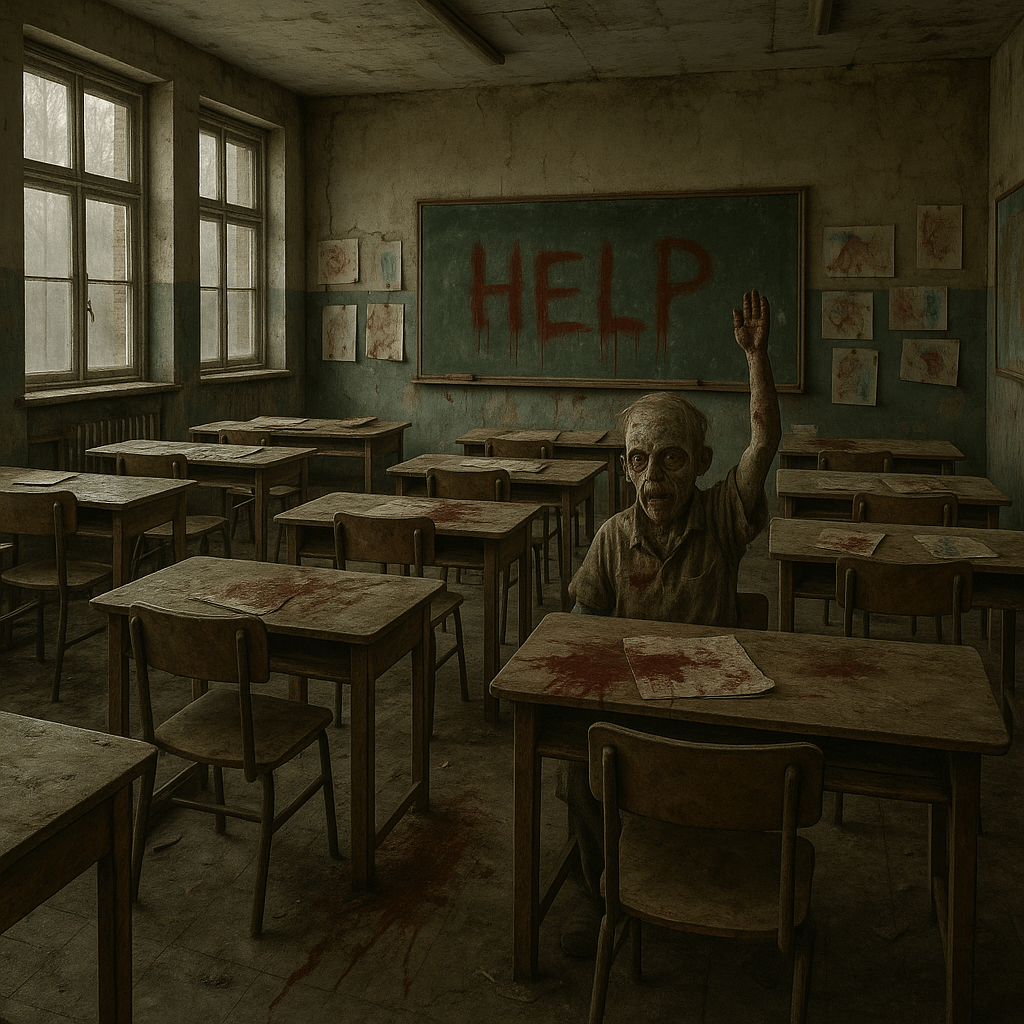
When we think of zombies, we picture staggering corpses with slack jaws, vacant stares, and a relentless hunger for flesh. But what’s really happening in that decaying brain? Let’s break it down—literally.
🧟♂️ Why Zombies Walk Like That: The Cerebellum & Motor Cortex
The cerebellum is the part of the brain responsible for coordinating movement, balance, and fine motor skills. Damage or degeneration in this area results in that signature zombie shuffle—slow, unsteady, and jerky. Add in deterioration of the motor cortex, which sends signals for voluntary muscle movement, and you’ve got a creature that can barely walk in a straight line, let alone run or climb. They’re clumsy, but still mobile enough to lurch after prey with single-minded determination.
🗣 Why Zombies Don’t Talk: The Speech Centers
Zombies don’t engage in conversation or scream out their feelings for a reason. The Broca’s area and Wernicke’s area—regions in the brain responsible for speech production and language comprehension—are typically destroyed or inactive. Without them, verbal communication is impossible. That’s why all you hear are groans, grunts, and the occasional brain-munching snarl.
🍽 Why Zombies Don’t Eat… Much
One of the strangest features of zombies is their apparent lack of basic biological needs—food, water, sleep. That’s where the hypothalamus and brainstem come in. These regions regulate hunger, thirst, body temperature, and sleep cycles. In a zombie, these systems are damaged or offline, leading to reduced or misfiring signals. While they may show obsessive feeding behavior, it’s often instinctual rather than necessary—they’re not digesting or metabolizing food in the normal sense.
😴 How Zombies Hibernate: Energy & Brain Shutdown
Here’s where things get interesting. The brain is a metabolic hog—it consumes 20–25% of the body’s energy. If large portions of the brain are no longer functioning, overall energy demand drops dramatically. This could explain why zombies are able to “hibernate” for extended periods of time, lying dormant in dark corners, crypts, or collapsed cities until new stimuli (like movement or sound) reactivates them. With fewer brain regions active, they’re able to survive on minimal caloric intake, behaving more like reptiles or insects than mammals.
💀 What’s Still Working?
Despite widespread brain damage, some regions must remain functional for a zombie to “live.” The brainstem is likely partially intact—controlling breathing, reflexes, and just enough baseline function to keep the body upright and moving. The amygdala and basal ganglia—centers of aggression, habit, and primal instinct—may also be preserved or hyperactivated, driving that relentless, bite-first behavior.


 Mutant Hollow: Zombie Science & Cryptid Pathogens